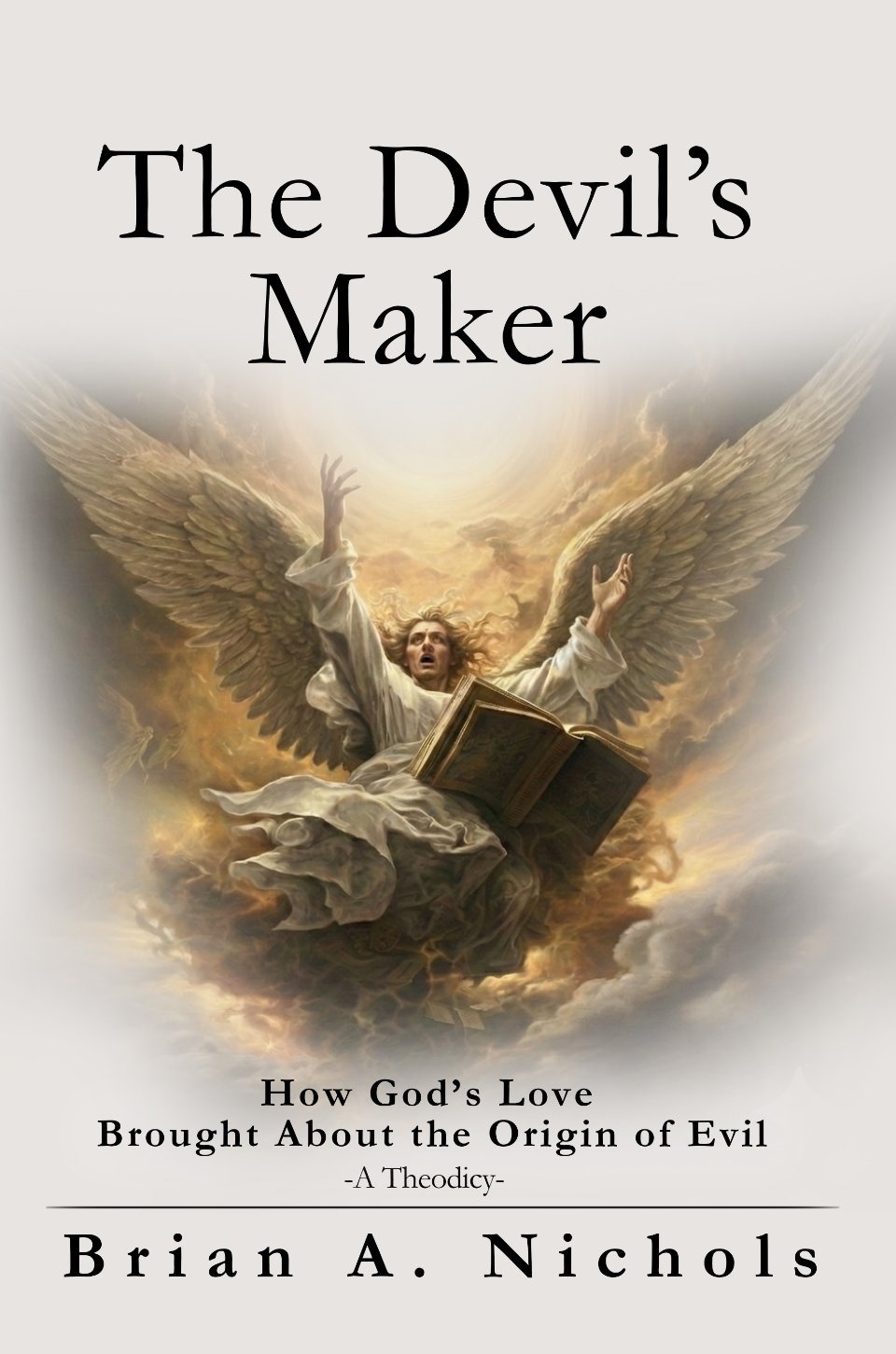
From the Introduction
Introduction
The Bible speaks of the Devil within the first few pages. Moses writes:
“Now the serpent was more cunning than any beast of the field which the LORD God had made.” (Genesis 3:1 NKJV)
This cunning creature deceived mankind (Genesis 3:13), brought sin and death into the world (Romans 5:12), murdered the Son of God (John 8:44), and holds the whole world in bondage, fear, and darkness (Hebrews 2:15; 1 John 4:18; 2 Corinthians 4:4). Scripture later reveals him to be “that serpent of old, who is called the devil…” (Revelation 12:9 NKJV).
God made the Devil.
This statement is the basis for one of the most enduring challenges to the Christian faith:
“If God is all-powerful and all-good, why does evil exist?”
For Christians, this question is deeply personal. How can a God of grace and love have anything to do with a world full of evil, suffering, disaster, and death? Why doesn’t He stop it? What is He doing in the midst of all the evil we experience?
We Christians affirm God’s power and His goodness because the Bible insists on both, and because our lives have been dramatically transformed through faith in Jesus Christ. But when we face loss, illness, suffering, or death—it can lead to confusion and doubt.
Skeptics often wield this question as a weapon against the truth claims of Scripture—specifically the nature and character of God. The accusation is this: if evil entered the world against God’s will, then He is not all-powerful. If God can stop evil but does not, then He is not good. Or this puzzle—impossible to solve—means He never existed in the first place.
This problem, called the Problem of Evil, has challenged thinkers for centuries. The effort to reconcile God’s goodness with the existence of evil is called a theodicy. This book is a theodicy.
How the “Problem of Evil” Is Framed and What It Assumes
The standard philosophical formulation goes like this:
- God is all-powerful and all-knowing.
- God is all-good.
- Evil exists.
Conclusion: Therefore, God is not all-powerful, not all-knowing, not all-good, or does not exist.
The argument frames evil as a fatal problem for belief in the God of the Bible—a contradiction that would force us to revise who God is or abandon belief in Him altogether.
This conclusion, however, does not follow from the premises alone. It requires an assumption.
The assumption is this: a perfectly good God who knows of every evil and has the power to stop it would never allow evil to exist for any reason. If He did, it would mean He has a moral defect, lacks full knowledge, or is weak. Such a God would not be worthy of worship.
It would also mean that Scripture is unreliable in what it says about God’s existence, about Christ’s resurrection, and about eternal life.
This assumption smuggles in a moral framework. It treats evil as something that cannot coexist with God’s goodness and power. But there is no law of logic which requires that such a God must prevent every evil. And feeling distressed or outraged by the idea that a good God coexists with evil does not constitute a logical contradiction.
If the premises above are accepted, the logical conclusion is not contradiction or atheism, but that God has a reason for allowing evil to exist. Let me explain.
The phrase “problem of evil” contains the assumption that the existence of evil poses a problem for an all-powerful and all-good God.
But what makes something a problem?
A problem exists when something goes wrong—when purposes are frustrated, or events escape the control of the one responsible.
If God is all-powerful, nothing exists outside His control. And if God is all-good, He must have morally sufficient reasons for what He allows. It follows from the definition of divine goodness that a perfectly good God cannot permit anything without moral justification rooted in His own nature.
That means if evil exists, it exists only because God has governed it and incorporated it into His purposes—not because it is an autonomous force beyond His control.
If God is all-good and all-powerful, evil does not pose a problem for the God of the Bible.
The so-called “problem of evil” arises not from the biblical doctrine of God, but from an imported assumption about how such a God ought to act—an assumption that neither Scripture nor logic requires us to accept.
But if evil is not a defect in God’s plan, then the question is no longer whether God can exist alongside evil, but why evil exists at all. And the answer must be found not outside God’s purposes, but within them.
This brings us to the core thesis of this book:
Evil exists as a necessary but temporary feature of redemptive history—sovereignly decreed and grounded in the Father’s eternal love for the Son—ordered for the purpose of Christ’s glorification—not an accident, rival force, or moral defect in God.
In other words: evil exists precisely because the biblical God is both in control of all things and all-good.
This claim does not arise from philosophical speculation or opinion. It emerges from taking seriously what God has revealed in Scripture about Himself, His word, and the centrality of Jesus Christ in all things.
From The Devil’s Maker: How God’s Love Brought About the Origin of Evil by Brian A. Nichols